
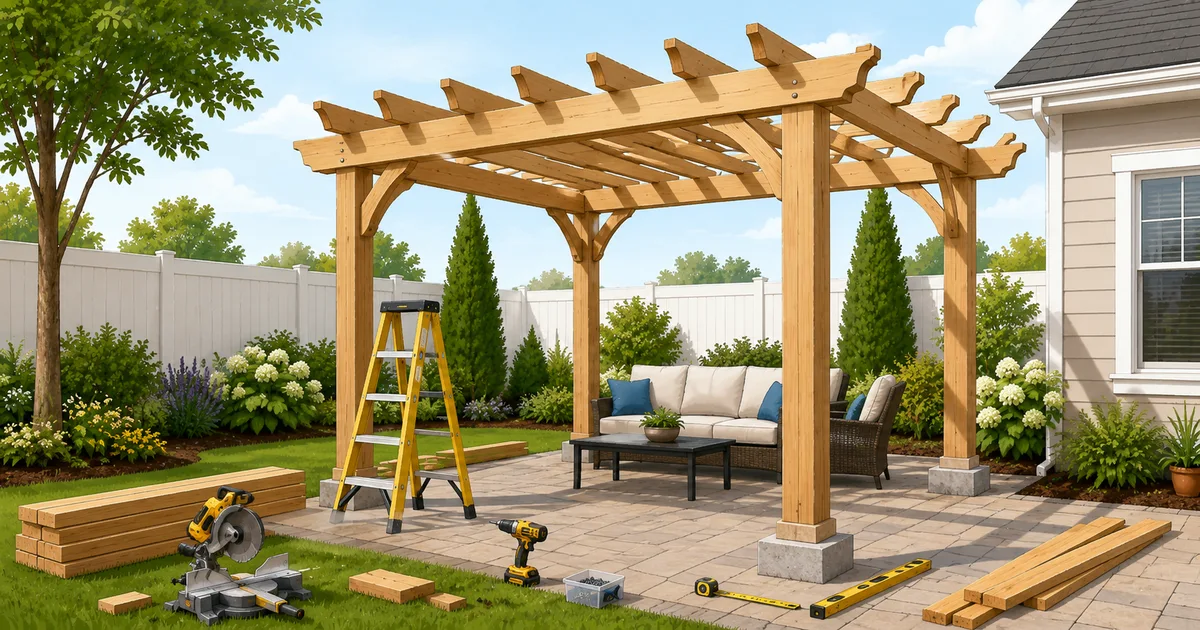
How to Build a Pergola
A comprehensive guide to planning and building a pergola covering attached vs freestanding design, material selection, post footings, framing, and cost.
Quick Summary
- Pergolas provide partial shade (50-80% depending on rafter spacing and optional lattice) and define outdoor living spaces.
- Attached pergolas cost less in materials but require a ledger board with proper roof flashing ($200-$500 additional).
- Post footings must extend below the frost line (typically 24-48 inches in northern climates) to prevent frost heave.
- Pressure-treated wood is the most economical pergola material at $15-$35/sq ft installed; vinyl is maintenance-free at $25-$50/sq ft.
- A 10x12 ft pergola takes 2-4 weekends for a DIY crew of 2; professional installation takes 2-3 days.
- Use our Pergola Cost Calculator to estimate materials and costs for your design.
Calculators Used in This Guide
A pergola transforms a bare patio or lawn area into a defined outdoor room. Unlike a solid roof structure, a pergola creates dappled light and partial shade while maintaining an open, airy feel. This guide covers the key decisions: attached vs freestanding, material selection, post footing requirements, structural framing, and optional features like lattice and lighting.
Pergolas are within reach of experienced DIYers who have basic framing skills. The most challenging part is setting posts accurately in concrete — once the posts are plumb and square, the framing follows standard deck-building techniques. If you have built a deck before, you can build a pergola. This guide focuses on planning and construction sequence; for cost comparison, see our Pergola Cost Calculator and the Lumber Cost Calculator for material pricing.
Step-by-Step Guide
Step 1: Design and Check Permits
Decide on size (10x10, 10x12, 12x16 ft common), style (attached or freestanding), and material. Attached pergolas cost less in materials but require ledger board flashing and structural attachment to the house. Freestanding pergolas are simpler to build but need four or six posts with concrete footings. Check local permit requirements — many municipalities require permits for structures over 120 sq ft or any structure attached to the house. HOA approval may take 2-6 weeks and often has additional requirements for height, color, and placement. Use Square Footage Calculator to confirm your coverage area before applying for permits.
Step 2: Choose Material and Calculate Lumber
Pressure-treated pine is the most economical choice ($2-$5 per linear ft), lasting 15-20 years with regular sealing. Cedar ($4-$8 per linear ft) is naturally rot-resistant, lightweight, and develops a beautiful silver-gray patina over 20-30 years. Redwood ($8-$15 per linear ft) offers premium appearance and durability similar to cedar. Vinyl pergolas ($5-$10 per linear ft) come in kits and require no maintenance. Use Lumber Cost Calculator to compare material costs for your specific dimensions. The table below compares materials side by side for quick reference.
Step 3: Set Post Footings
Mark post locations accurately using batter boards and string lines. Dig holes 12 inches in diameter and 24-48 inches deep — the depth must extend below the local frost line (check with your building department). Pour 4-6 inches of gravel at the bottom for drainage. Set post anchors or J-bolts in concrete. Make sure anchors are perfectly aligned and level in both directions — use a string line and 4-ft level. Let concrete cure 24-48 hours before mounting posts. Use Concrete Calculator to estimate how many 80 lb bags of concrete mix you need per hole (typically 2-3 bags per 12-inch diameter, 36-inch deep hole).
Step 4: Install Posts
Attach 6x6 posts to the anchors using post base hardware rated for exterior use (galvanized or stainless steel). Plumb each post in both directions and brace temporarily with diagonal 2x4s screwed into stakes in the ground. For attached pergolas, install a ledger board against the house wall with proper Z-flashing and 1/2-inch lag bolts into the house framing (rim joist or wall studs). The ledger height determines the finished height of the pergola — typical height is 8-10 ft above the finished patio surface. Do not attach the ledger to brick veneer or siding alone; it must be bolted into solid structural framing.
Step 5: Install Beams
Install doubled 2x8 or 2x10 beams across the tops of the posts. Use galvanized through-bolts or heavy-duty joist hangers to secure beams to posts. The beams run the length of the pergola and carry the rafters. Check that beams are level before moving on — any tilt here is magnified across the entire structure. Splice beams only over posts, never in mid-span. For pergolas wider than 12 ft, consider 2x10 beams or reduce rafter span by adding a center post.
Step 6: Install Rafters
Install 2x6 or 2x8 rafters perpendicular to the beams at 16-24 inch spacing. Use galvanized joist hangers and screws or nails rated for exterior use. Standard rafter spacing: 24 inches for an open, airy feel (approximately 50% shade), or 16 inches for more coverage (60-65% shade). Rafters can extend past the beams by 12-24 inches on each side for decorative overhangs — these are called rafter tails. Use 2x8 rafters for spans over 10 ft to prevent sagging. Number of rafters = (beam length / spacing) + 1.
Step 7: Add Decorative Elements
Optional additions: install lattice panels between rafters for increased shade (70-80% coverage), add post trim and decorative corbel brackets, mount an outdoor-rated ceiling fan, install low-voltage LED string lights or lanterns, and apply a penetrating stain or sealer to wood pergolas. Vinyl pergolas are complete with no additional finishing needed. For electrical additions, hire a licensed electrician — do not run outdoor wiring yourself unless you have experience with exterior-rated conduit, boxes, and GFCI protection.
Step 8: Stain, Seal, or Maintain
For wood pergolas, apply a penetrating exterior stain or sealer within 2-4 weeks of construction (the sooner the better to prevent UV graying and water damage). Use a stain with UV protection to reduce fading. Reapply every 2-3 years for pressure-treated pine or every 3-5 years for cedar and redwood. Clean the pergola annually with a garden hose and mild soap to remove pollen, dust, and bird droppings. Vinyl pergolas need only a rinse with a hose.
Worked Examples
10x12 ft Freestanding Wood Pergola
A 10x12 ft freestanding pergola using pressure-treated lumber with 6x6 posts, doubled 2x8 beams, and 2x6 rafters at 24 inch spacing.
- →Coverage area: 10 x 12 = 120 sq ft.
- →Posts: 4 posts, 6x6 x 10 ft = $220-$320.
- →Beams: doubled 2x8 x 12 ft (2 beams x 2 ply = 4 pieces) = $120-$180.
- →Rafters: 7 rafters at 2x6 x 10 ft = $100-$150.
- →Concrete: 4 holes x 2.5 bags each = 10 bags of 80 lb mix = $60-$80.
- →Post anchors: 4 saddles with hardware = $60-$100.
- →Joist hangers, bolts, screws, brackets: $80-$150.
- →Stain/sealer: 1 gallon penetrating exterior stain = $40-$60.
- →Total materials: $680-$1,040.
Result: DIY material cost: $680-$1,040. Freestanding saves $200-$400 vs attached because no ledger board or flashing is needed. Professional installed (freestanding): $2,500-$4,000. DIY savings: $1,800-$3,000.
Order lumber at least 2 weeks before you plan to build. Let it acclimate on site (stacked flat, covered from rain) for 5-7 days so it adjusts to local humidity before you cut and assemble. This reduces twisting and cupping after construction.
Reference Table
| Material | Cost/sq ft | Material $/linear ft | Lifespan | Maintenance | DIY Difficulty |
|---|---|---|---|---|---|
| Pressure-Treated Pine | $15-$35 | $2-$5 | 15-20 years | Seal every 2-3 years | Intermediate |
| Cedar | $20-$45 | $4-$8 | 20-30 years | Seal every 3-4 years | Intermediate |
| Redwood | $25-$50 | $8-$15 | 25-40 years | Seal every 3-5 years | Intermediate |
| Vinyl | $25-$50 | $5-$10 | 25+ years | None (wash with hose) | Beginner (kit) |
| Aluminum/Steel | $30-$60 | $10-$20 | 30+ years | None | Professional |
Reference Table
| Decision | Option A | Option B | Impact on Cost | Impact on Difficulty |
|---|---|---|---|---|
| Attachment style | Attached to house | Freestanding | Attached saves 10-15% on materials | Attached is harder (ledger flashing) |
| Post count | 4 posts (rectangular) | 6 posts (larger spans) | 6 posts adds 30-50% in footing cost | More posts = more digging and alignment |
| Rafter spacing | 24 in (open feel, 50% shade) | 16 in (more shade, 65%) | 16 in spacing uses 50% more rafters | Minimal difference in labor |
| Rafter overhang | 12 in each side | 24 in each side | Minimal cost difference | No difference |
| Lattice top | No lattice | With lattice (80% shade) | Lattice adds $1-$3/sq ft | Adds 1-2 hours labor |
Common Mistakes to Avoid
Setting posts without checking alignment
Use string lines and a level to align post anchors perfectly in both directions. Once concrete cures, misaligned posts cannot be adjusted without re-pouring.
Insufficient footing depth above frost line
Footings must extend below the local frost line. In northern climates, this is 36-48 inches. Shallow footings heave with freeze-thaw cycles, tilting the pergola.
Skipping ledger board flashing (attached pergolas)
The ledger board must have proper Z-flashing to prevent water from seeping behind it. Water intrusion at the ledger causes rot in the house framing.
Using green (unseasoned) lumber
Use kiln-dried or seasoned lumber for pergolas. Green lumber twists, cups, and checks as it dries, warping the structure and creating gaps.
Over-spanning rafters
2x6 rafters at 24 inch spacing can span a maximum of 8-10 ft. For pergolas wider than 10 ft, use 2x8 rafters or reduce spacing to 16 inches.
Not accounting for wind uplift
Use proper hardware rated for wind resistance. Hurricane ties, through-bolts (not just lag screws), and post base connectors with wind clips prevent the pergola from lifting during storms.
DIY Planning Checklist
- Check permits and HOA requirements before buying materials.
- Design pergola size, style (attached vs freestanding), and material.
- Calculate lumber, concrete, and hardware quantities using our calculators.
- Order lumber 2 weeks ahead and let it acclimate on site.
- Mark post locations precisely with batter boards and string lines.
- Dig post holes 12 in diameter, below frost line (24-48 in).
- Pour concrete footings with post anchors; let cure 24-48 hours.
- Install ledger board with Z-flashing (attached) or mount posts (freestanding).
- Plumb and brace all posts securely with diagonal 2x4s.
- Install doubled beams across posts with through-bolts.
- Install rafters at chosen spacing with joist hangers.
- Add optional lattice, lighting, ceiling fan, or decorative brackets.
- Apply penetrating stain or sealer to all wood surfaces.
- Reapply sealer every 2-3 years (PT pine) or 3-5 years (cedar).
When to Contact a Professional
Pergolas are a rewarding DIY project for experienced builders. Hire a professional for:
- Attached pergolas on houses with complex roof lines that require intricate flashing and structural connection work.
- Large pergolas over 200 sq ft that need engineer-stamped plans for permits.
- Aluminum or steel pergolas that require welding and specialized tools.
- Pergolas with integrated electrical for fans, lighting, or motorized shades — always use a licensed electrician.
- Anyone who is not comfortable digging post holes, mixing concrete, or working at 8-10 ft height with power tools.
Professional pergola installation: $3,000-$8,000 for a standard 10x12 ft pergola depending on material. Design-build firms charge 20-30% more than a general contractor but provide a single point of responsibility for design, permits, and construction.
Frequently Asked Questions
Related Calculators
Pergola Cost Calculator
Estimate pergola installation cost by material and size.
Concrete Calculator
Calculate bags or cubic yards of concrete needed for any project.
Lumber Cost Calculator
Estimate total lumber cost by board feet or linear feet.
Square Footage Calculator
Calculate the square footage of any room or space in seconds.
Deck Cost Calculator
Calculate deck building cost for wood or composite decking.
References and Data Sources
APA - Engineered Wood Association Outdoor Structure Guide
Design values for wood pergola components including span tables, beam sizing, and connection requirements for pressure-treated and cedar lumber in exterior applications.
IRC - International Residential Code - Accessory Structure Requirements
Building code requirements for accessory structures including footing depth, wind resistance, attachment methods, and permit thresholds for residential pergolas.
All references are used for general estimation guidance only. BuildCalcHub does not claim certification, endorsement, or partnership with any listed organization. Always consult a licensed professional for your specific project requirements.
DIY Guides
Explore more step-by-step guides